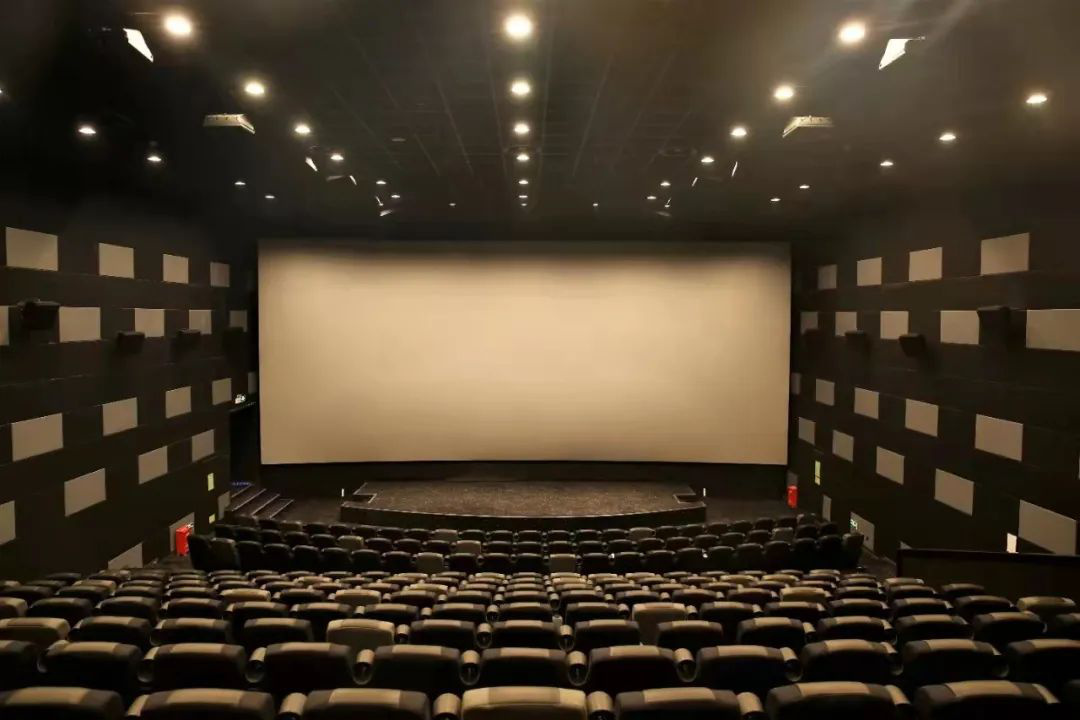
The change of screen
At present, the mainstream film projection form is "reflective imaging". Previously, it was film, which was recorded on coke film. After digital words, the image picture is that the image signal is driven by the corresponding processing circuit to form an optical signal, which is focused by the lens and then presented on the medium. The screen is such a medium.
In the early days of the film, white walls and white cloth served as imaging media. The projector is aimed at a white wall/cloth and projects the image onto the white wall, so the rough and original image appears in front of people.
The surface of the white wall is rough, and the white cloth is a little better but still not delicate. Their light reflection is "diffuse reflection", which can be reflected evenly in the range of 180. However, as a cinema, the included angle between the screen plane and the seating area is less than 180 degrees, usually the maximum included angle is only 60-90 degrees, which means that there is no way to use the light beyond the included angle, and the reflected light cannot be greater than the incident light. Therefore, the effective brightness gain of white walls and white cloth as screens cannot reach 1. Moreover, because the optical properties of white wall and white cloth can’t be controlled, but the optical properties greatly affect the image quality, so white wall and white cloth are not ideal film imaging media.
So a professional "screen" came into being.
Manufacturers apply coatings on the curtain base, such as barium sulfate or metal powder, as well as reflective screens made of glass beads and transmissive screens made of translucent materials. At present, the widely used metal screen, that is, spraying a layer of metal material on the screen base to enhance the reflection performance and polarization characteristics of light, creates a brand-new image reflection medium compared with the traditional white screen, reasonably improves the technical performance of the screen, such as brightness gain, and greatly improves the imaging quality of the screen.
Improvement of technical indicators
There are many technical indexes to evaluate the screen, and the common optical performance indexes include brightness, clarity, reflection angle, color, resolution and so on. Different screens present different picture quality, the fundamental reason is that the screen indicators are different. Indicators closely related to screening are as follows:
1. Brightness coefficient
That is, the "gain" that everyone knows in the industry is also the most representative indicator of the screen.
2. Effective scattering angle 2α
The effective scattering angle 2α of the screen is twice the maximum horizontal viewing angle α at which the screen reflection brightness is based on the brightness value of 5 viewing angle, and the brightness drop is not more than 50%. The measurement of this angle is based on the screen normal, with α on one side of the normal and 2α on both sides. Usually, "scattering angle" is used instead, and the larger the effective scattering angle of the screen is, the better.
3. Sound attenuation
The sound attenuation caused by the speaker located behind the screen of a transparent screen is defined as the difference between the sound attenuation of 8KHz and 12.5KHz and the sound attenuation of 500Hz, which is not more than 3dB and 6dB respectively. This item is easy to be ignored, especially the application of microporous screen will be more and more. Whether the diameter, spacing arrangement and perforation rate of sound transmission holes meet the requirements, reduce sound attenuation and ensure clear and realistic sound.
3. Color of reflected light
Screen surface requires good color reducibility, that is, the color chromaticity of reflected light and incident light should be consistent. The color temperature difference between the incident light and the reflected light on the screen shall not be greater than 200k K. This indicator is easy to reach the standard on the screen, but what needs attention is the color chromaticity of the incident light.
4. Resolution
The current definition, which we express in "pixels". The film age is represented by "line pairs". The screen used for projecting movies should have a projection resolution of more than 80 line pairs/mm. According to the resolution of the current screen, the resolution that can be displayed can exceed 4K or even reach 8K. (It will be explained in detail in the related article "Clarity". )
6. Screen material and coating uniformity
The material and coating of the whole screen should be uniform, and the uniformity of brightness distribution should be not less than 80%. This item can best reflect the attitude and process maturity of screen manufacturing, and the surface of unqualified screen products can be distinguished by naked eyes, such as stripes, spots and irregular shadows.
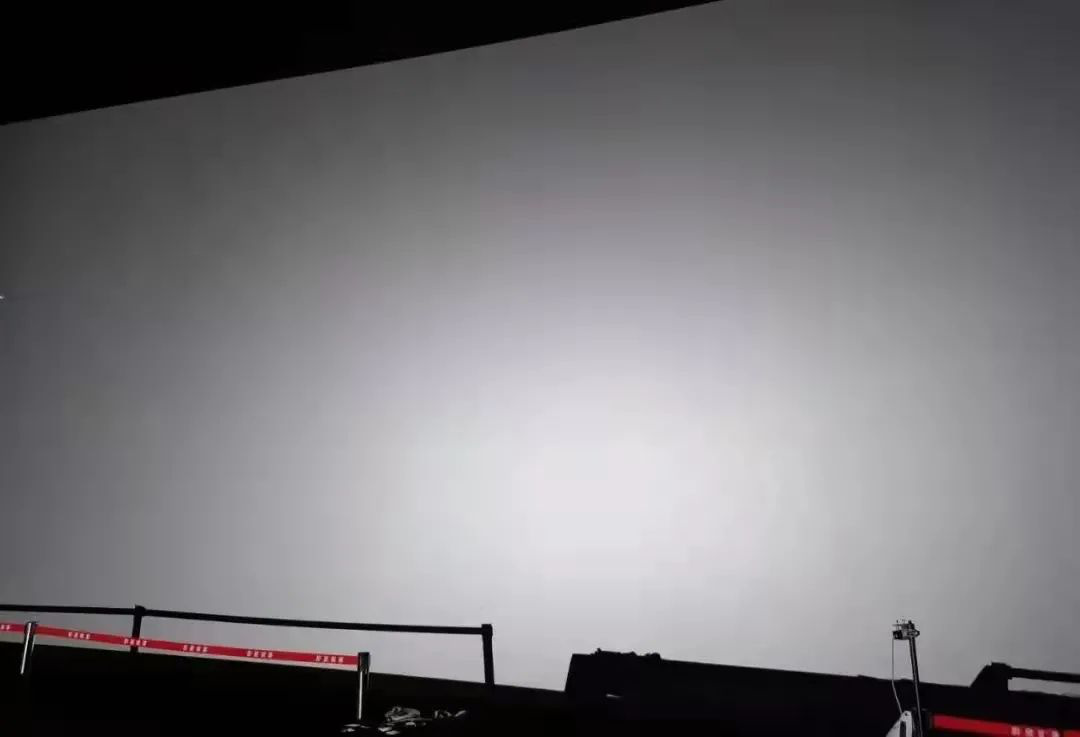
(Image source: Ivy Gallery Movie Star Screen)
Of course, including the screen.Technical index of physical performance. The progress of modern screen technology revolves around these two parts.
for exampleBrightness aspectThe higher the brightness gain, the more concentrated the light reflected by the screen will be, which will produce the effect of bright in the middle and dark around. At this time, we call it "brightness uniformity" decline. From the technical principle, the brightness gain and brightness uniformity of the screen are a pair of contradictory terms, which cannot be well taken into account. Therefore, the progress of technology lies in obtaining higher brightness gain on the basis of higher brightness uniformity.
Therefore, many screen manufacturers are trying to improve this performance. For example, the film star screen improves the formula of reflective coating and introduces a 2.8 gain product, which makes the screen have both higher gain and larger effective scattering angle, and obtains better brightness uniformity in practical use and improves the picture quality. For the audience, it is that no matter which area in the cinema, uniform image brightness can be obtained.
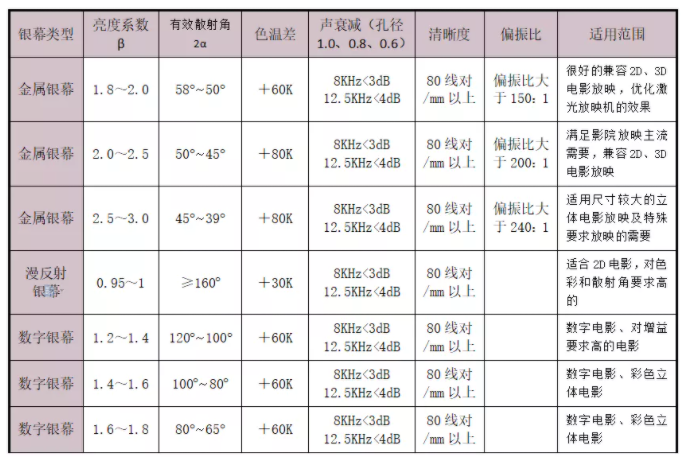
Indicators and application scope of "movie star" screen (table)
Such as light reflection efficiency. The reflectivity of the screen is the ratio of the light projected by the projector to the intensity of the reflected light on the screen. The reflectivity of 50% means that half of the light is lost. In the past, the reflectivity of ordinary metal curtain was about 50%, but the newly developed screen has obviously improved the reflectivity, reaching more than 85% or even more than 90%. Compared with the traditional screen, the new screen makes the light reflection of the screen more controlled and has no stray reflection by reducing the sound transmission aperture, improving the coating arrangement and adding optical microstructure.
Another example is the polarization ratio. The polarization ratio of the screen is also one of the important indicators to eliminate ghost. If the polarization ratio is insufficient, the ghost will be heavier. Generally, the partial direct ratio of ordinary metal screens is required to be above 150:1. Nowadays, high-end screens have a polarization suppression ratio of over 500:1. It is not easy to feel the existence of ghosts.
In terms of physical performance, there are mainly the following indicators:
1. Aperture and perforation rate.
Before the screen, there were large sound holes, mainly to ensure the sound efficiency and frequency of the speaker behind the screen. In the era of digital movies, when the pixel size of 2K-definition movies is in a certain proportional relationship with the size of sound transmission holes, "moire" will occur. If you want to reduce moire, you can only destroy the above proportional relationship. Therefore, reducing the aperture of the screen has become one of the ways. At the same time, in order to improve the reflectivity, it is also necessary to consider changing the perforation rate while reducing the aperture.
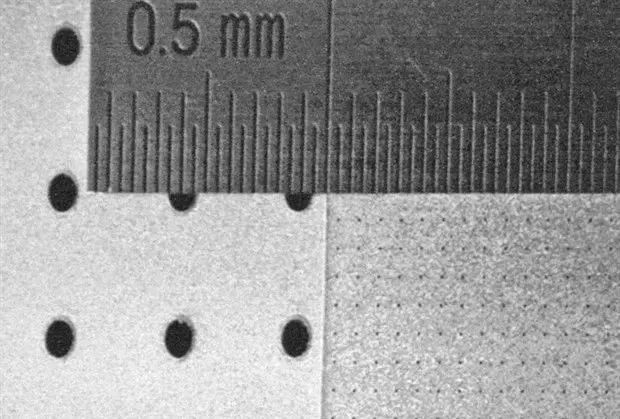
For example, the aperture of the ultimate screen is only 150 microns, and the "movie star screen" can be mass-produced in almost unlimited size by continuously improving the processing equipment and technology of seamless splicing 0.6mm At the same time, the perforation rate can still reach 4.5%, which is not blindly reduced, fully ensuring the advantages of sound attenuation, but visually reducing the interference of sound-penetrating holes to a very low level and achieving excellent balance.
2. Screen size and strength.
As the picture of the film changes, the size of the screen also changes.
At the beginning, the aspect ratio of the movie screen was 1:1.33. After the wide-screen movie appeared, the aspect ratio of the screen increased to 1:2.35. The aspect ratio of the covered film is 1:1.85, while the aspect ratio of the IMAX giant screen is 1:1.44. In the digital age, the aspect ratio of the picture has changed slightly, with the ratio of wide screen being 1:2.39 and IMAX giant screen being 1:1.78. At the same time, the screen size is getting bigger and bigger, and the width is expanded from six or seven meters to twenty or thirty meters.
The size of the screen is a great test of the production strength of manufacturers. At present, there are two technical solutions, one is vertical, that is, the factory building has to be higher than the screen height, and the screen is hung vertically for machine spraying; The other is horizontal spraying, and the domestic "movie star screen" has the real production capacity of vertical spraying of super giant screen with a width of 100 meters and a height of 25 meters.
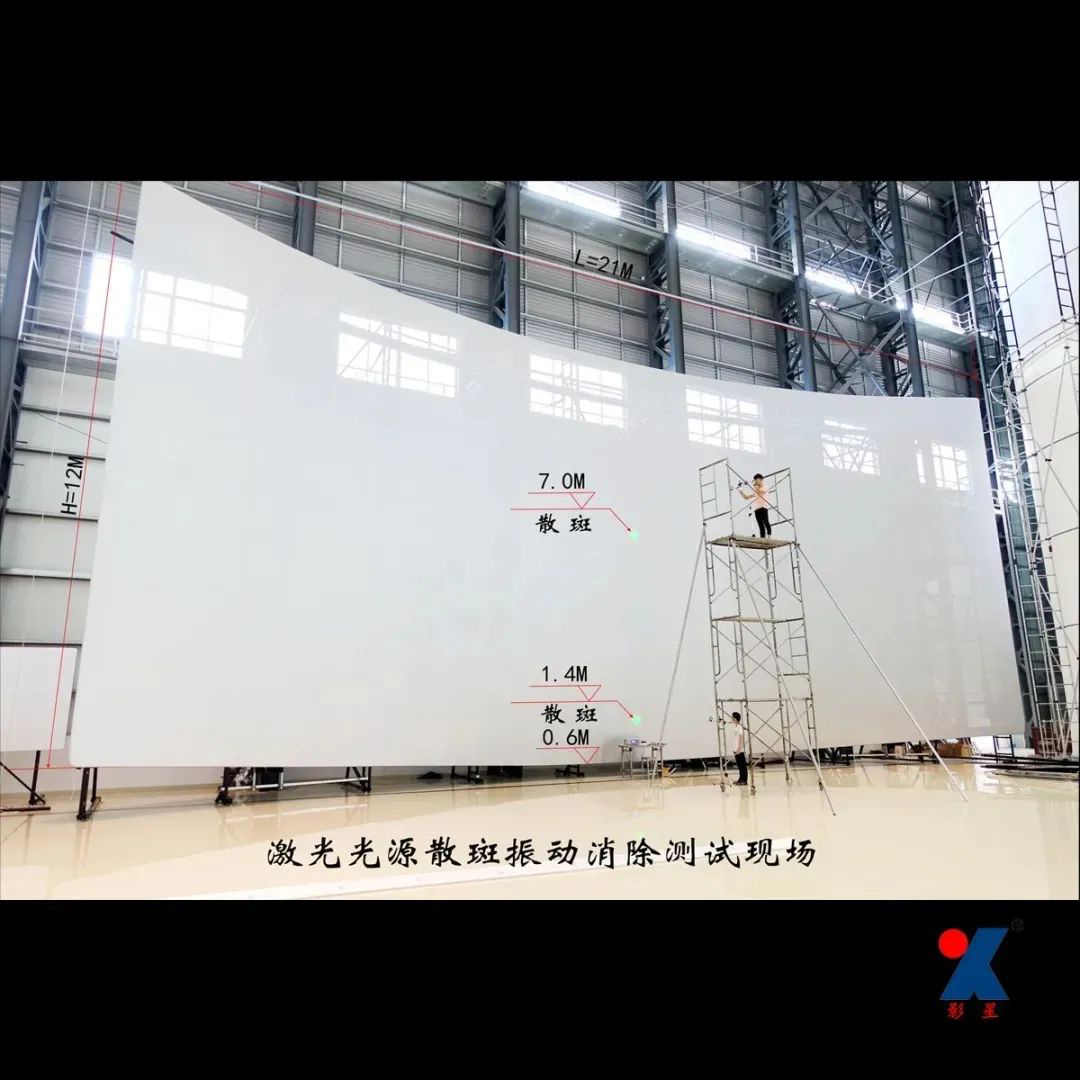
With the increase of screen size, the tension requirement of screen is increased, which puts high demands on the strength of screen, especially the splicing strength and effect. The strength requirement also includes the edge strength of screen hanging. As far as the intensity of screen base is concerned, one of the effective ways to reduce the speckle of tricolor laser is to vibrate the screen, and long-term vibration will undoubtedly put forward requirements for the intensity of screen base.
Nowadays, with the use of nano-new materials made of PET, the physical properties of the screen have been greatly improved. Under the conditions of heat, moisture and tension, the deformation of the screen is very small, and there is almost no relaxation damage after long-term vibration, which is more durable.
3. Splicing technology.
Because the screen is not produced as a whole, it is formed by splicing, so the splicing process of the screen also affects its performance. Good splicing should have a certain strength and be invisible at a certain distance. As a professional screen product provider, Wuhu Movie Star Giant Screen Co., Ltd. improved the screen seam technology through technical reform, so that the seam could not be seen at a distance of 1 meter in front of the screen, far exceeding the national standard.
4. Foldability.
In the past, most screens could not be folded, which meant that they had to be assembled in a drum, which was inconvenient for transportation, storage and hanging. Nowadays, the folding of nano-material screens has been improved, resulting in a number of foldable screens.
Important note:
"Why are the pictures in the cinema more and more colorful?"
"Because the post-production is excellent." -that’s not the point.
"Because the performance of the projector has improved." -this is on the one hand.
"The performance of the imaging terminal screen has been continuously improved. 。” -this is the positive solution.
Therefore, paying attention to screen selection and protecting the screen needs more attention and professionalism.
(Title, text source: Ivey movie gallery, text has nothing to do)