Ministry of Public Security: Issues such as extorting confessions by torture and abnormal deaths of people involved have been fundamentally curbed.

  CCTV News:On September 14th, the Ministry of Public Security held a press conference to inform about the further promotion of the standardization of public security law enforcement. At the meeting, Sun Maoli, director of the Legal Affairs Bureau of the Ministry of Public Security, introduced that public security organs throughout the country adhere to the guidance of the Supreme Leader’s New Era Socialism with Chinese characteristics Thought, thoroughly study and implement the Supreme Leader’s rule of law thought, constantly enhance the "four consciousnesses", strengthen the "four self-confidences" and achieve "two maintenance", persist in taking the people as the center, focus on building a public security goal of the rule of law, unremittingly carry out standardized construction of law enforcement, constantly improve the level of rule of law in public security work and the credibility of law enforcement, and strive to let the people handle

  First, strengthen the top-level design and continuously deepen the standardization of law enforcement.The Party Committee of the Ministry of Public Security conscientiously implements the spirit of the important instructions of the Supreme Leader General Secretary and the decision-making arrangements of the CPC Central Committee, pays attention to the systematic concept, the thinking of the rule of law and the strong foundation orientation, and makes unremitting efforts to standardize law enforcement as an overall and basic work. It has successively issued a series of guiding opinions and convened national meetings for deployment, thus promoting the continuous development of the standardization of law enforcement in public security organs. In order to implement the spirit of the National Public Security Work Conference, the Ministry of Public Security issued the "Opinions on Further Promoting Strict, Standardized, Fair and Civilized Law Enforcement" in December 2019, and put forward new tasks for further deepening the standardization of law enforcement around the new situation and new challenges faced by public security law enforcement in the new era. After the outbreak of COVID-19, the Ministry of Public Security issued a series of guidance documents to further strengthen strict, standardized, fair and civilized law enforcement, emphasizing rational and civilized law enforcement, combining leniency with severity, and promoting prevention and control work in a coordinated way on the track of the rule of law. In August 2020, entrusted by the State Council, Zhao Kezhi, State Councilor and Minister of Public Security, reported the standardization of law enforcement of public security organs to the 21st meeting of the 13th the National People’s Congress Standing Committee (NPCSC). The meeting fully affirmed the achievements made in the standardization of law enforcement of public security organs, and put forward opinions and suggestions on further strengthening and improving the law enforcement of public security organs. In May this year, the Ministry of Public Security issued the Opinions on Deepening the Reform of the Supervision and Management Mechanism of Public Security Law Enforcement, which comprehensively stipulated the construction of the whole process and all-factor management system for the operation of public security law enforcement power, providing an important starting point and a powerful starting point for deepening the standardization of law enforcement.

  The second is to strengthen system construction and build a complete system of law enforcement norms.While cooperating with the legislature to formulate and revise key laws and regulations such as anti-terrorism law, criminal law and criminal procedure law, the Ministry of Public Security has continuously strengthened its own system construction and formed a set of standardized system of law enforcement and case handling with public security characteristics, ensuring that national laws and regulations are comprehensively, normatively and concretely implemented in public security work.The first is to improve law enforcement standards.The Ministry of Public Security has formulated and constantly improved the procedural rules for public security organs to handle administrative cases and criminal cases and the Detailed Rules for Law Enforcement of Public Security Organs, issued guidelines for on-site law enforcement activities, guidance on the discretion of public security management penalties and other work norms, tightened law enforcement procedures, standardized law enforcement behaviors and plugged law enforcement loopholes.The second is to refine the guidelines for class cases.In line with the requirements of clear use and practical service, the Ministry of Public Security, together with the Supreme People’s Court and the Supreme People’s Procuratorate, has issued a series of normative documents to clarify the applicable conditions and evidence requirements of related crimes and provide law enforcement guidance for cracking down on outstanding crimes according to law, focusing on epidemic prevention and control, eliminating evils and cracking down on illegal fund-raising and telecommunication network fraud.The third is to establish a scientific system.Formulate the legislative plan and annual legislative plan of the Ministry of Public Security, formulate the legislative technical specifications and rules of the Ministry of Public Security, strictly implement the legal review and filing review mechanism of normative documents, select and promote the excellent law enforcement system of local public security organs, and effectively guarantee the legitimacy and scientificity of public security law enforcement decisions and systems.

  The third is to strengthen supervision and management and standardize the operation of law enforcement power.Public security organs keep a close eye on the key links of law enforcement, adhere to the problem orientation, strengthen the supervision and management of law enforcement activities, promote the reform of law enforcement responsibility system, and strive to make law enforcement power operate in a standardized way on the track of the rule of law.First, actively promote the reform of the system of accepting cases and filing cases.The Ministry of Public Security has strengthened the management of law enforcement sources, issued special opinions, carried out the reform of the system of accepting and filing cases in public security organs across the country, comprehensively standardized the workflow of accepting and filing cases, and strengthened supervision and management. At present, all provincial public security organs have formulated supporting implementation opinions, and 18 provincial public security organs have added case management institutions. All localities have made efforts to solve outstanding problems such as not receiving the report, not receiving the case after receiving it, and illegally accepting the case by paying a return visit to the police, inspecting the case, and reconsidering the decision not to file the case.The second is to improve the legal review system.Actively promote the "two unifications" reform in which the legal department of the public security organ conducts a unified examination of the key law enforcement links of criminal cases and unites the procuratorial organs, and implement the system of stationed and full-time legal officers in law enforcement service institutions and police stations with large handling tasks, and strictly control the quality of cases. At present, all provincial public security organs have issued "two unification" documents, and jointly issued guiding opinions with procuratorial organs on counterpart connection, and the quality of handling cases by public security organs has steadily improved.The third is to strengthen the construction of law enforcement responsibility system.We will fully implement the law enforcement responsibility system, improve the public security organs’ law enforcement quality assessment and accountability mechanism for law enforcement faults, implement the lifelong responsibility system for handling cases and the accountability system for investigating misjudged cases, build a law enforcement responsibility system in which the right must be held accountable and the abuse of power must be held accountable, promote the police to earnestly perform their duties, and ensure the effective implementation of constitutional laws.The fourth is to strengthen the joint efforts of internal and external law enforcement supervision.We will continue to promote the construction of law enforcement supervision and management committees, establish and operate a 12389 complaint platform nationwide, formulate and promulgate regulations on public law enforcement by public security organs, deepen the reform of the "sunshine policing" mechanism, accept legal supervision by procuratorial organs according to law, and consciously accept supervision from all sectors of society to ensure open and fair law enforcement activities.

  The fourth is to focus on reform and innovation and continuously improve the quality and efficiency of law enforcement.Public security organs constantly strengthen the reform and innovation of law enforcement methods, make full use of rigid supervision and management tools and means, and urge the police to develop standardized law enforcement habits and improve the quality and efficiency of law enforcement.The first is to fully implement online case handling.Public security organs all over the country have generally developed and applied the law enforcement case handling and supervision and management system, regularly carried out online case handling and synchronous supervision and management, realized online record of law enforcement information, online generation of law enforcement documents, online evaluation of law enforcement quality and online early warning of law enforcement problems, and embarked on an "assembly line" and "one-way street", making law enforcement more transparent and standardized, and law enforcement supervision more intelligent and accurate.The second is to establish and improve the record system of the whole process of law enforcement.The public security organs take the "law enforcement trace and closed-loop management" as the breakthrough point, fully equip the police with on-site law enforcement recorders and other equipment, comprehensively use various recording methods, realize the combination of online and offline recording, and supplement the text and audio-visual recording, and record all fields and links of law enforcement from receiving the report to handling the case, thus forming a trace-tracing and retrospective management of the whole process of law enforcement activities.The third is to standardize the management of property involved.The public security organs should build a special management place for the property involved, implement a separation mechanism between case handling and property management, and establish an operation information management system to conduct real-time dynamic supervision and management of the whole process of property involved. Some places have also promoted the construction of cross-departmental centralized management places and information management platforms for property involved in the case, realizing "physical stillness and procedural circulation".The fourth is to standardize the construction of law enforcement cases.The Ministry of Public Security deployed all localities to complete the standardized transformation of law enforcement case handling places, focusing on physically isolating the case handling area from other functional areas, strictly using management, strengthening security, and fundamentally curbing issues such as extorting confessions by torture and abnormal deaths of people involved. On this basis, the public security organs deployed at the city and county levels will build a "one-stop" law enforcement case management center that integrates law enforcement case handling, supervision and management, and service guarantee. By the end of July, 2021, more than 2,500 centers had been built by public security organs across the country.

  The fifth is to strengthen education and training and focus on improving the ability of law enforcement subjects.Public security organs thoroughly study and implement the supreme leader’s thought of rule of law, focus on the mission and task requirements of public security organs in the new era, strengthen and improve law enforcement education and training with specialization, and strive to improve the police’s rule of law literacy and law enforcement ability.The first is to strengthen the education and training of the rule of law.Carry out in-depth education and training of the supreme leader’s rule of law thought, and comprehensively, accurately and deeply explain the great significance, rich connotation, spiritual essence and practical requirements of the supreme leader’s rule of law thought. Strengthen the concept of the rule of law of all police officers, especially leading cadres, cultivate the awareness of the rule of law, procedural awareness, human rights protection awareness and conscious acceptance of supervision, establish a mechanism for leading cadres to learn and use the law, and strive to improve their ability to solve complex problems by using the rule of law thinking and the rule of law.The second is to continuously increase law enforcement training.. The Ministry of Public Security promotes the routine, systematization and actual combat of law enforcement training, and regards law enforcement training as the important content of the "four compulsory trainings" such as the appointment, appointment and promotion of police posts and the award and promotion of police ranks. Public security organs throughout the country have continuously improved the police’s law enforcement ability by carrying out "textbook" law enforcement training, special lectures on new laws and regulations, legal knowledge contests, post competitions, and auditing trials.The third is to continuously deepen the law enforcement qualification examination system.In order to give full play to the role of promoting learning, training and use by examination, the Ministry of Public Security has implemented and continuously reformed and deepened the law enforcement qualification grade examination system in public security organs across the country.Up to now, about 1.9 million police officers in public security organs nationwide have obtained basic law enforcement qualifications and 60,000 have obtained advanced law enforcement qualifications.On this basis, many local public security organs have introduced measures to encourage the police to take the national unified legal professional qualification examination. For example, up to now, more than 700 police officers in Jinan Public Security Bureau have passed the legal examination, effectively improving the legal literacy and law enforcement ability of the police.

  While affirming the achievements, the public security organs also clearly see that at present, there is still a big gap between the standardized construction of law enforcement of public security organs and the relevant requirements of the central authorities and the new expectations of the people. The level of law enforcement of public security police needs to be further improved, and the supervision and management mechanism of law enforcement and the law enforcement responsibility system still have shortcomings and weak links, which need to be further improved and perfected.next stepUnder the guidance of the Supreme Leader’s Socialism with Chinese characteristics Thought in the New Era, the public security organs throughout the country will thoroughly study and implement the Supreme Leader’s thought on the rule of law and the spirit of the General Secretary’s "July 1st" important speech, comprehensively implement the Opinions on Deepening the Reform of the Supervision and Management Mechanism of Public Security Law Enforcement as the main line, and continuously promote the standardization of law enforcement and continuously improve the legalization level and law enforcement credibility of public security work in accordance with the deployment requirements of the promotion meeting for comprehensively deepening the reform in the political and legal fields and the promotion meeting for deepening the reform of the police mechanism of public security organs throughout the country. We will focus on the following tasks:

  One isNew tasks and requirements put forward by coordinating development and security, focusing on outstanding issues that affect national political security, social stability and people’s peace, strengthening legal policy research, accelerating the promotion of legislation in key areas, constantly improving the law enforcement system, improving the law enforcement case handling mechanism, and providing timely and efficient service guarantee for the implementation of various measures to prevent risks, ensure safety and protect stability.

  The second isDeepen the reform of law enforcement supervision and management mechanism, strengthen the construction of law enforcement responsibility system, further improve and perfect the law enforcement power and responsibility system of public security organs at all levels, departments and posts, implement the reform of unified examination and export mechanism for the legal department of criminal cases, comprehensively promote the construction of law enforcement case management center, vigorously promote the information construction of law enforcement, strengthen the supervision and management of all factors in the whole process of law enforcement, and effectively improve the quality and level of law enforcement.

  The third isVigorously strengthen the construction of the public security team ruled by law, organically combine the study and education of the party history, the education and rectification of the public security team and the standardization of law enforcement, thoroughly investigate and rectify stubborn diseases, strengthen the concept of the rule of law of the whole police, especially leading cadres, improve law enforcement training, deepen the law enforcement qualification examination system, encourage the police to participate in the national unified legal professional qualification examination, and continuously improve the police’s sense of purpose and ability to perform their duties according to law.
Industry depth! The article takes you to know in detail the market scale, competition pattern and development trend of China catering O2O industry in 2021.

Major listed companies in catering O2O industry:At present, the listed companies in domestic catering O2O industry mainly include Meituan (03690.HK), Hungry, and 02013.HK.

Core data of this article:Online order volume; Catering O2O market scale; O2O penetration rate of catering; market share

1. Overview of catering O2O industry

— — Definition and classification: catering O2O= catering +O2O

Catering O2O refers to the use of the Internet to divert online users offline to bring customers to catering businesses and increase income; Or drain offline customers to online for maintenance or customer relationship management, so as to prolong the customer’s consumption cycle and increase the number of customers’ consumption.

Catering O2O= catering +O2O, catering *O2O, internetization of traditional catering and materialization of internet catering. Traditional catering enterprises realize the closed loop of omni-channel marketing and sales, payment and customer management system after integration through internet tools, and finally realize information management and improve overall revenue.

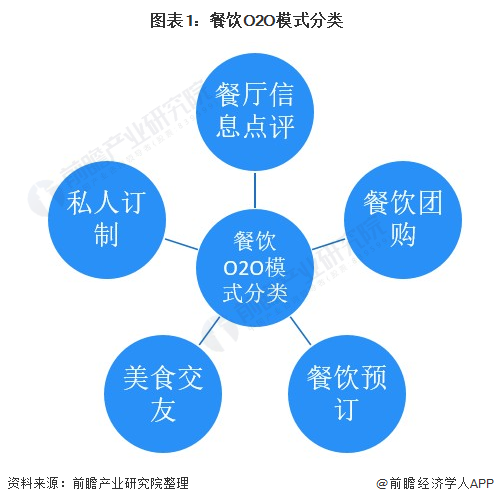
Catering O2O has two meanings. One is Internet catering, which means that Internet enterprises provide Internet applications for catering enterprises, mainly at the marketing level, such as group buying network. The other is that catering enterprises actively embrace the Internet and develop Internet applications, which means that catering enterprises actively apply Internet products. The classification of catering online to offline mainly includes:

Chart 1: Classification of Catering online to offline

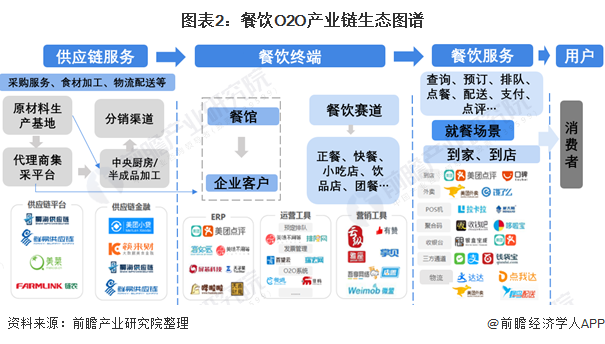
2) Analysis of the industrial chain of catering O2O industry: based on the traditional industrial chain, it enables the inquiry, reservation, queuing, ordering and distribution of catering services.

The industrial chain of China catering O2O is based on the traditional industrial chain, which includes raw material processing chain and supply chain services. The catering O2O industry that empowers and upgrades the traditional catering industry is reflected in the inquiry, reservation, queuing, ordering and distribution of catering services.

The network awareness of online users and offline merchants in China continues to increase, and the number of catering O2O websites or applications that are at the core of the industrial chain and connect online users and offline merchants is increasing rapidly, and the user experience is also improving day by day; Together with other enterprises that provide basic services such as payment, CRM and closed-loop verification, the industrial chain of China catering O2O industry is becoming more and more perfect, which has prepared a good foundation for the rapid development of the market.

Chart 2: Ecological map of catering O2O industrial chain

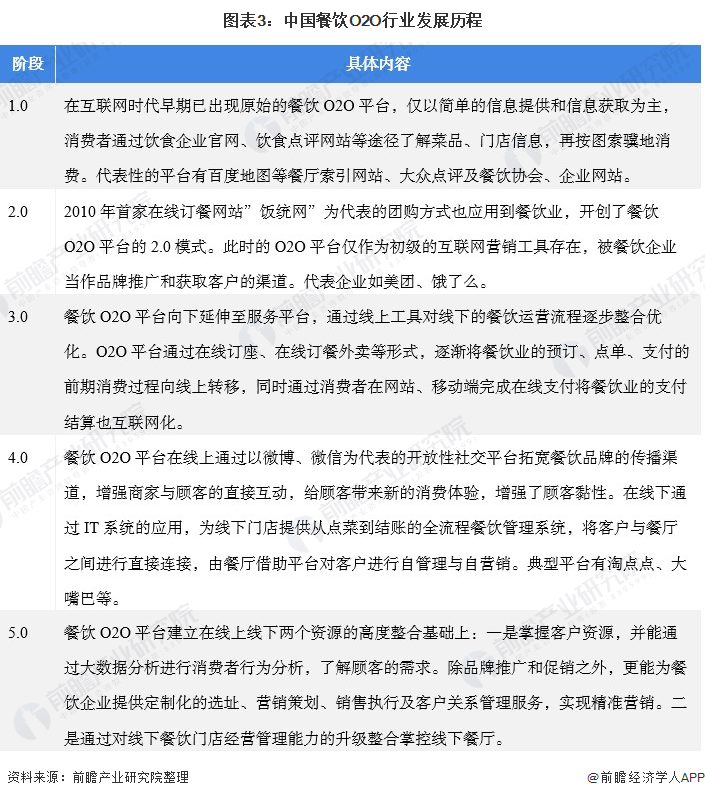
2. The development process of China catering O2O industry: the market is constantly evolving, and online and offline resources are highly integrated.

The catering O2O platform has developed from the traditional review platform to the comprehensive platform, and has undergone the transformation from version 1.0 to version 5.0. This is an evolving market, and the future development will give birth to more vertical, subdivided, professional and personalized catering O2O platforms.

Chart 3: Development course of catering O2O industry in China.

3. Analysis of the development status of catering O2O industry in China.

— — Overall situation of the industry: catering O2O rebounded strongly in the post-epidemic era.

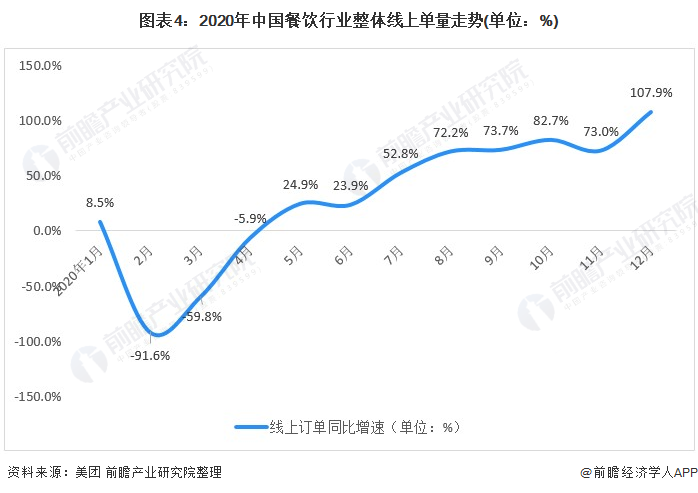
(1) The overall online volume of the catering industry in China: a strong rebound under the epidemic.

In the face of the epidemic, catering has shown a stronger ability to resist risks. In particular, online catering orders showed a strong rebound trend. According to the data of Meituan, the overall online catering orders in February 2020 decreased by 91.6% compared with the same period of last year. The overall online order volume in March decreased by 59.8% year-on-year; In April, the overall online order volume began to recover rapidly, and the growth rate turned positive for the first time in May. Since then, it has been climbing steadily and achieved a year-on-year increase of 107.9% in December.

Chart 4: Overall online unit volume trend of China catering industry in 2020 (unit:%)

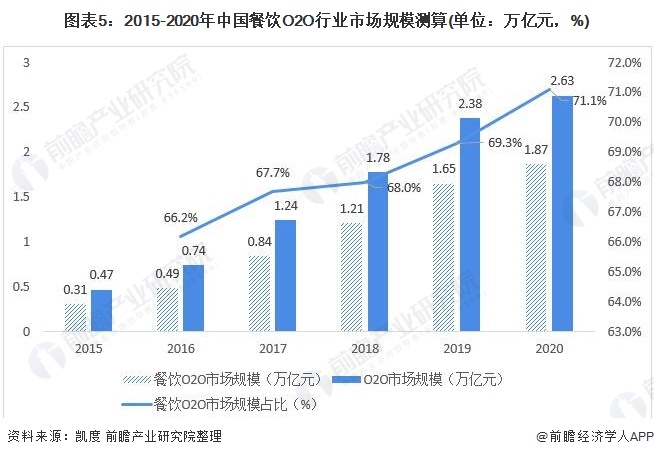
(2) The market size of China catering O2O industry: rapid growth.

According to Kaidu data, China’s O2O market has grown rapidly in recent years. In 2020, the size of the O2O market reached 2.63 trillion yuan. Combined with the data of Meituan, the proportion of O2O catering at home and O2O catering at the store, the scale of China’s catering O2O market is close to 1.87 trillion yuan in 2020. It accounts for 71.1% of the entire O2O market.

Chart 5: Calculation of the market size of catering O2O industry in China from 2015 to 2020 (unit: trillion yuan,%)

Note: The market size and proportion of catering O2O are calculated.

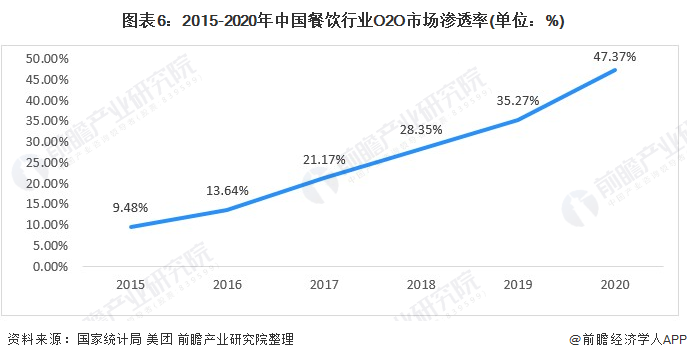
(3) The penetration rate of O2O market in China catering industry: it continues to rise.

In terms of penetration rate, the O2O penetration rate of China’s catering industry has been singing all the way. In 2020, due to the impact of COVID-19 epidemic, the penetration rate of catering O2O in the whole catering industry market accelerated to 47.37%.

Chart 6: O2O market penetration rate of catering industry in China from 2015 to 2020 (unit:%)

Note: catering O2O penetration rate = catering O2O market size/catering market size *100%.

2) China catering O2O market segment 1: catering ingredients O2O.

— — Food and beverage supply chain: per capita consumption is insufficient, and penetration rate is still not high.

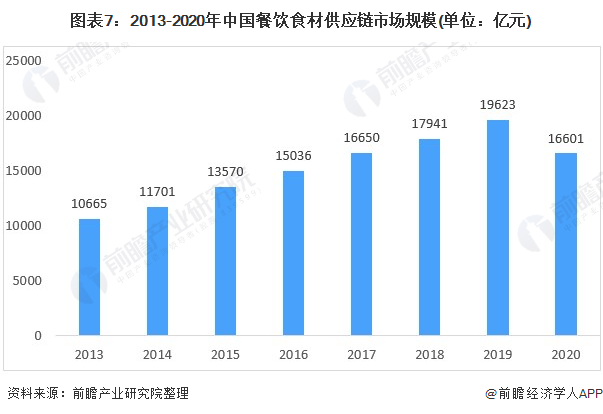
According to the data of the National Bureau of Statistics, in 2020, China’s catering revenue totaled 3.95 trillion yuan. According to the calculation that the cost of raw materials accounts for 42%, the market size of catering ingredients supply chain is about 1.66 trillion yuan. At the same time, although China is the second largest catering market in the world, the per capita catering consumption in 2020 is only 21% of that in the United States, and there is still much room for improvement.

Chart 7: Market Scale of Food and Beverage Supply Chain in China from 2013 to 2020 (unit: 100 million yuan)

At the same time, there are a series of problems in the traditional food supply chain market, such as scattered traders, opaque market information, lack of control over the quality of food, and high cost of food. Therefore, upgrading the food supply chain with the Internet has become a hot entrepreneurial direction in 2014. After six years of development, the penetration rate of internet plus food supply chain industry is still not high. There are two main reasons: it is difficult for Internet solutions serving end consumers to meet the high-quality requirements of consumers and the profit requirements of start-ups at the same time. Internet solutions that serve enterprise users are difficult to truly land in the whole industry.

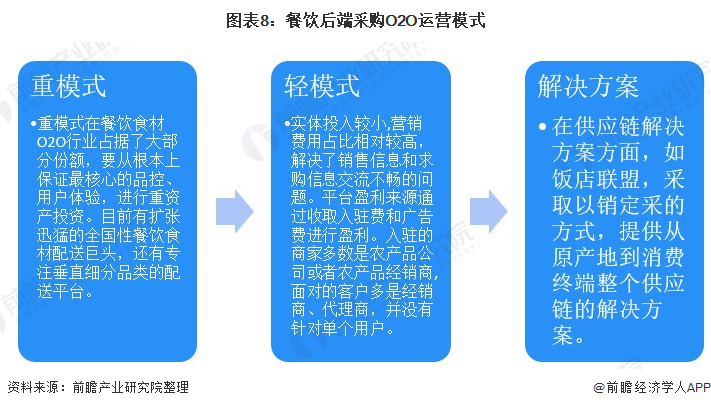
(2) O2O operation mode of catering back-end procurement: light assets+total assets+solutions.

There are three main modes of O2O operation in catering back-end procurement: heavy mode (self-operated mode), light mode (platform mode) and solution mode.

Chart 8: O2O operation mode of catering back-end procurement

3) China catering O2O market segment 2: catering take-out O2O.

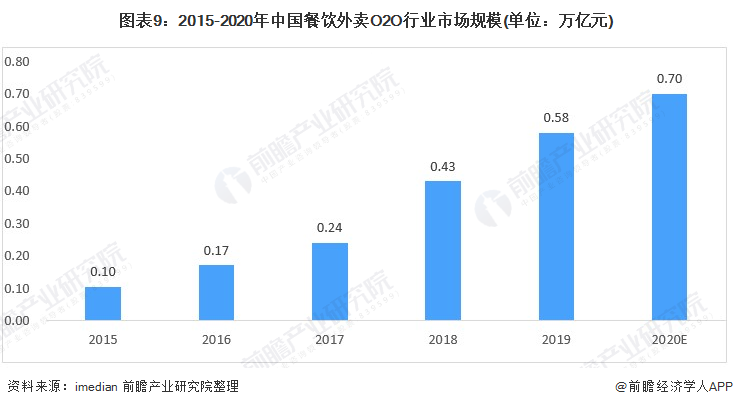
By the end of 2020, the number of take-away users nationwide was close to 500 million, and the total order volume reached 17.12 billion, up 7.5% year-on-year; The transaction scale increased by 14.8% year-on-year, reaching 835.2 billion, 175 billion more than the 660 billion predicted by previous institutions. Food and beverage take-out accounts for 80% of home service in life service O2O industry. At the same time, after the outbreak, consumers stayed at home for epidemic prevention, and restaurant food was generally shut down, which became the choice of catering businesses. Many well-known catering enterprises quickly made adjustments, optimized their operation modes, embraced third-party take-out platforms and switched to the online market. In summary, the epidemic will greatly boost the development of food and beverage take-out O2O, so the market size of food and beverage take-out O2O is expected to exceed 700 billion yuan in 2020.

Chart 9: Market size of China catering take-out O2O industry from 2015 to 2020 (unit: trillion yuan)

4) China catering O2O market segment 3: Arrival catering O2O market.

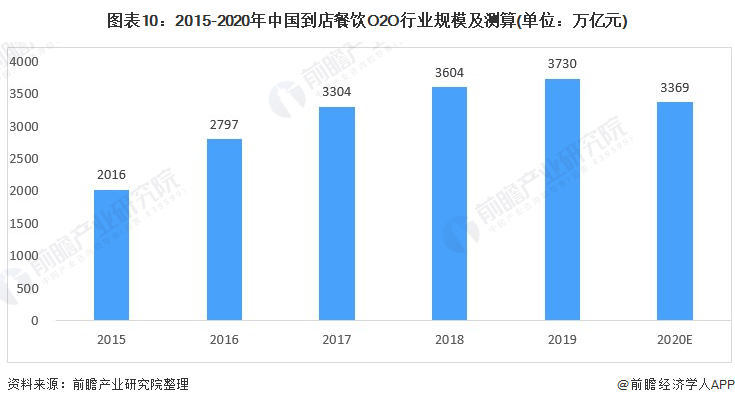
According to the analysis of China catering O2O industry market, the arrival business accounts for 39% of the O2O platform market, including 60% of home catering. Based on this, it is calculated that the market size of China catering O2O industry will be 336.9 billion yuan in 2020.

Chart 10: The scale and calculation of the O2O industry of arrival catering in China from 2015 to 2020 (unit: trillion yuan)

4. Analysis of the competition pattern of China catering O2O market.

— — Regional competition pattern: Guangdong has the largest number of catering O2O enterprises.

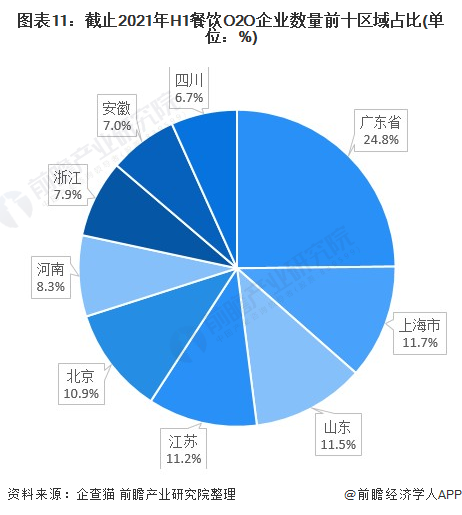
In terms of regional distribution, Guangdong Province is currently the province with the largest number of catering O2O-related enterprises in China, accounting for more than 24.8% among the top ten provinces and cities, followed by Shanghai and Shandong with 11.7%, 11.5% and 11.2% respectively.

Chart 11: proportion of top ten regions in the number of H1 catering O2O enterprises by 2021 (unit:%)

2) Enterprise competition pattern: common development in many fields.

— — O2O platform for catering ingredients: National, regional and vertical platforms are developing together.

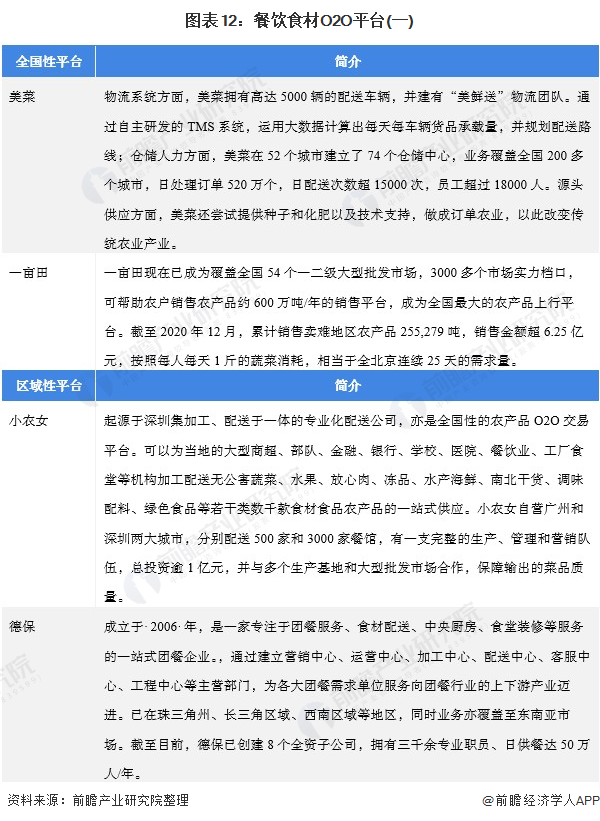
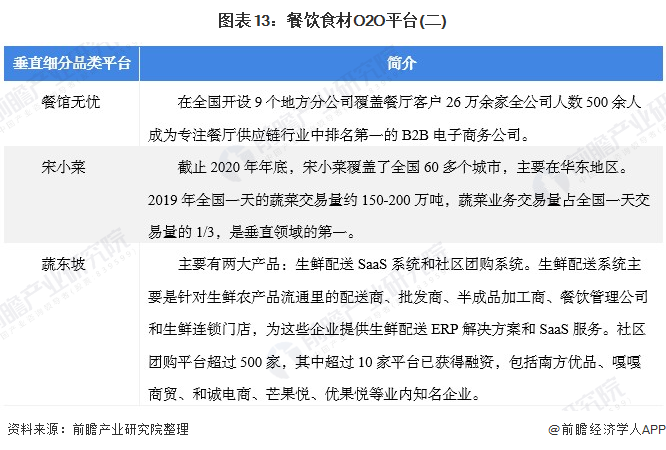
At present, the representative platforms of O2O, a national catering ingredient, are American food and an acre of land; The representative platforms of regional catering ingredients O2O include small farmers and Debao. The representative platforms of vertical catering ingredients O2O are Worry-Free Restaurant, Song Dishes and Vegetable Dongpo.

Chart 12: O2O platform for catering ingredients (I)

Chart 13: O2O platform for catering ingredients (2)

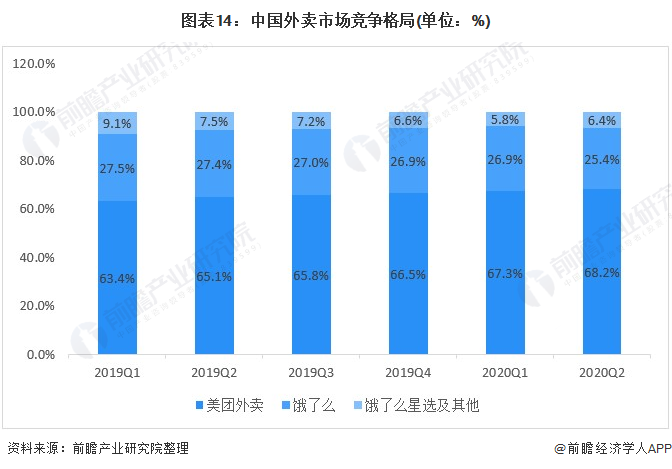
(2) The competition pattern of China catering take-out O2O market: the share of US group take-out exceeds 60%.

According to the "Analysis Report on the Development of China Takeaway Industry in Q2 2020" released by Trustdata, by the first half of 2020, the market share of Meituan Takeaway had reached 68.2%, and the proportion of hungry people was 25.4%.

Chart 14: Competition Pattern of China Takeaway Market (Unit:%)

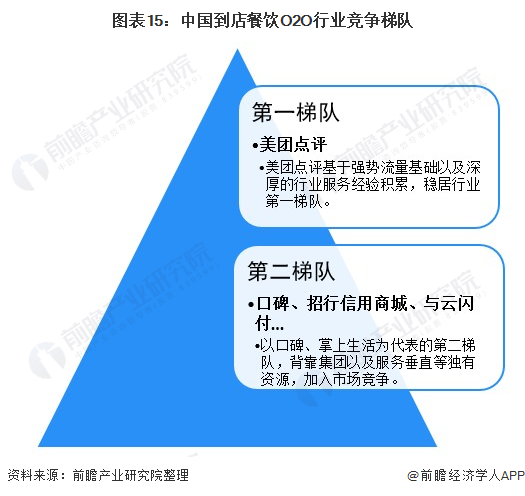
(3) The competition pattern of China’s in-store catering O2O industry: Meituan comments on the first market share.

(3)-1 Competition echelon of O2O industry in China: Meituan reviews the market share and ranks first.

Meituan commented that the GTV market share of the restaurant catering business ranked first. Meituan commented on the solid traffic base of catering service users in the store, and based on years of experience in the industry, it gradually consolidated its leading edge in the industry. In the future, the competition in the catering market will continue to focus on user service and business empowerment, so as to improve the operational efficiency of the catering industry.

Chart 15: Competition echelon of O2O industry in China arrival restaurant

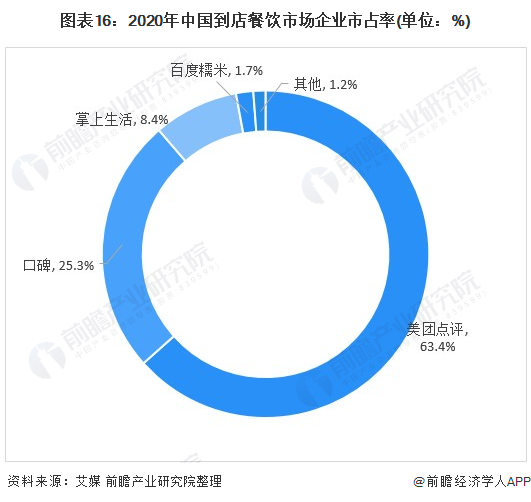
(3)-2 The market share of enterprises in the O2O catering industry in China is mainly based on the US Mission and public comments.

In China, the O2O industry of restaurant-to-store catering is mainly based on US delegations and public comments. Founded in 2003, Public Comment is the earliest local life information platform in China. At the beginning, it only aggregated user evaluation and business information, and began to enter the group buying territory in 2010; Also in this year, the US Mission was launched. In 2020, the restaurant catering share of Meituan Review was 63.4%. Followed by word of mouth, the store share accounted for 25.3%.

Chart 16: Market share of enterprises in the catering market in China in 2020 (unit:%)

5. Development prospect and trend forecast of catering O2O industry in China.

— — Forecast on the Development Prospect of Catering O2O in China

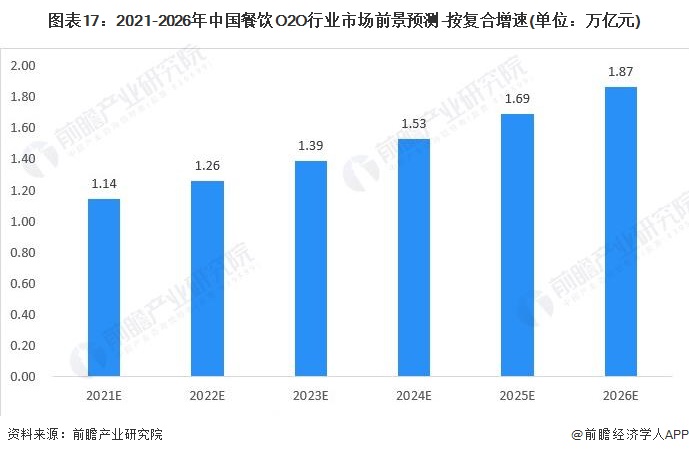
(1) The development prospect of China catering O2O industry under the compound growth rate: the market scale is expected to approach 1.87 trillion yuan in 2026.

The compound annual growth rate of China catering O2O is 10% from 2021 to 2026, and the market size is expected to approach 1.87 trillion yuan by 2026.

Chart 17: Market prospect forecast of China catering O2O industry from 2021 to 2026-according to compound growth rate (unit: trillion yuan)

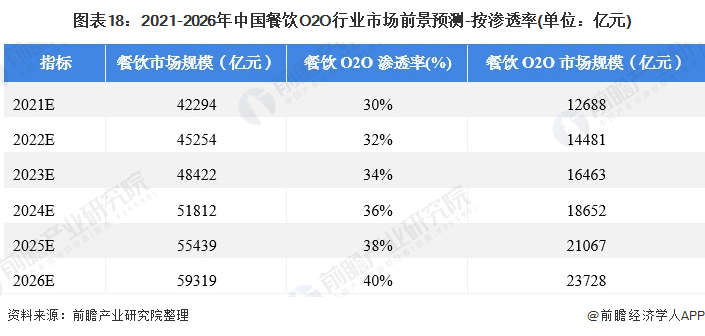
(2) The development prospect of China catering O2O industry under the penetration rate: the market scale is expected to reach 2.4 trillion yuan in 2026.

According to the penetration rate of catering O2O in the whole catering industry, it is assumed that the market penetration rate of catering O2O will reach 40% by 2026, and its market scale is expected to reach 2.4 trillion yuan by 2026.

Chart 18: Market Prospect Forecast of China Catering O2O Industry from 2021 to 2026-By Permeability (unit: 100 million yuan)

2) Analysis of the development trend of catering O2O industry in China.

(1) The development trend of in-store catering O2O: consumption recovery under normal epidemic situation.

The development trend of in-store catering O2O is mainly reflected in the upgrade of in-store catering service and the recovery of consumption under the normal epidemic situation.

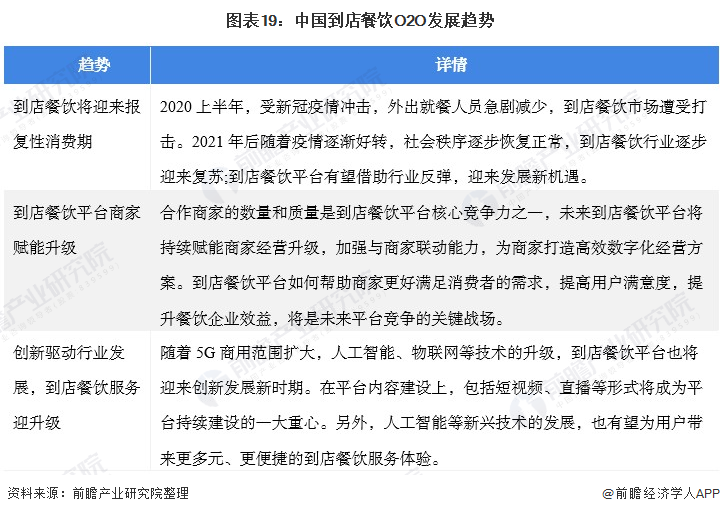
Chart 19: Development Trend of O2O in China's Arrival Dining

(2) the development trend of O2O in home catering: quality, technology and new retail development of take-away food.

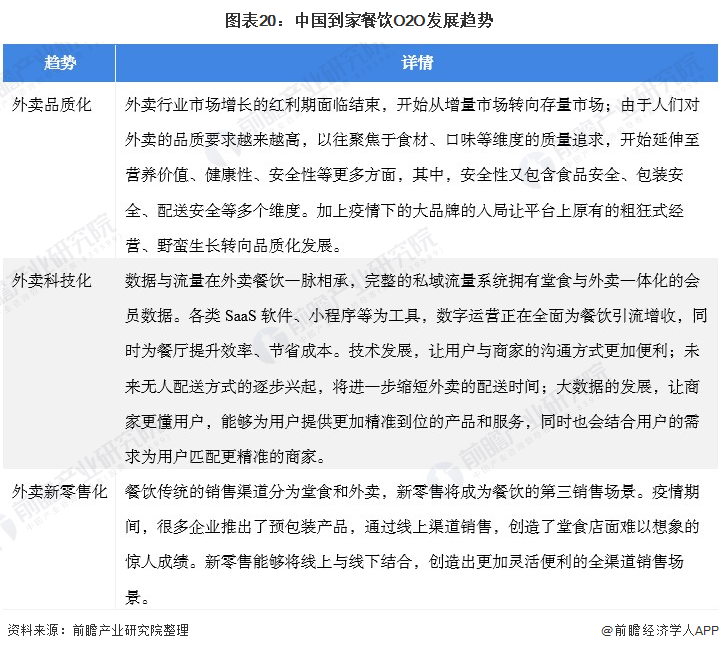
The development trend of O2O in home catering is mainly manifested in the quality of take-away, the technology of take-away and the new retail of take-away.

Chart 20: O2O development trend of home catering in China

For more industry-related data and analysis, please refer to Forward-looking Industry Research Institute. At the same time, Forward-looking Industry Research Institute also provides solutions such as industrial big data, industrial research, industrial chain consultation, industrial map, industrial planning, park planning, industrial investment attraction, IPO fundraising feasibility study, IPO business and technology writing, and IPO working paper consultation.

The "Anti-Violence" that has no "peace of mind" can only make you remember the bath towel.


Special feature of 1905 film network Does it look nice?The tail of November, the most puzzling problem for the author is the above five words.Simply from the perspective of "watching", the film "Eliminating Violence", which makes many people exclaim that it has the flavor of old Hong Kong films, is undoubtedly good enough.


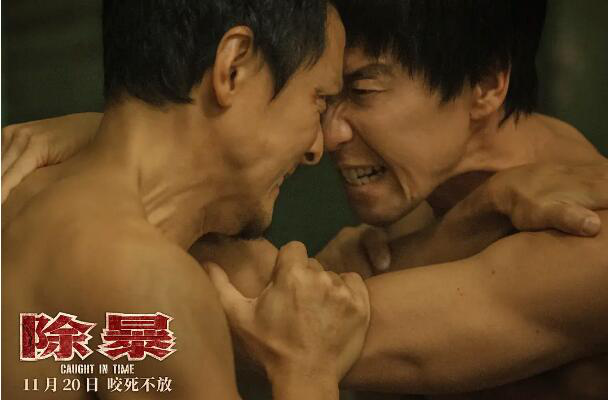
Spectacular and exciting gun battles, fine restoration of the urban features in the 1990s, and the bathroom melee and execution court drama that everyone talked about, have failed to meet the public’s expectations for this theme and the typology of the star lineup under the verification of the box office results of easily breaking through 200 million in the "off-season" of winter and moon.


However, such a criminal investigation theme work that revisits the past of "cracking down on evil" in the new era, the biggest topic aroused after the screening is only related to the towel that the two protagonists can’t fall off when they fight.


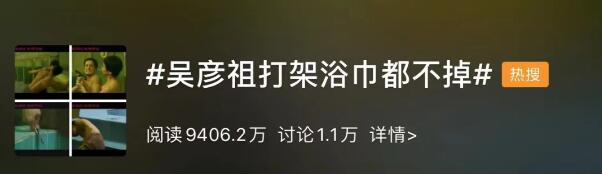
Ironically, similar to the "regret" implied in the topic of "Daniel Wu didn’t even drop his bath towel in a fight" which rushed to the top of the hot search list, Eliminating Violence, which gave a full-screen visual crit, did not give any narrative surprise.


Visual pleasure is just a fig leaf of the narrative of "two heroes"


For the fans of old Hong Kong films, the closest thing to "Eliminating Violence" is the nesting of "Double Heroes" mode in China and Hong Kong police films in the golden age.


In the film, Zhong Cheng (Wang Qianyuan), the newly arrived captain of Interpol, and Zhang Ying (Daniel Wu), who is based on Junwei Zhang, the "first gangster in China", are portrayed as the poles of good and evil with equal fighting power and ingenuity.


In order to show their abilities, the film set up multiple contrast shots, just like the montage of shooting practice, or the "same frame" of the video hall where they learned their unique skills from the police and bandits films.Interestingly, the clips that the two watched repeatedly were from the classic Hong Kong-style duo films..


Unfortunately, beyond force and bad taste, Eliminating Violence, which is too obsessed with external stimuli, neither rubs the chivalrous feeling given by John Woo to Bloody Heroes, nor provides the "wits-fighting" attribute of classic paradigms.


Director Ho Leung Lau once said in an interview that the original idea of the film was simply to focus on this policeman and gangster. Later, at the suggestion of producer Han Sanping, the current police and gangster group images were constructed by combining real reports.


Even if we have done enough time restoration in the aspect of service, the writing from policewoman to gangster is too facetious, and the film has failed to escape from the format framework that contemporary audiences have long been familiar with and bored with.


The young criminal police still have the strength to pull open the gangster’s car door after being shot in the heart at close range, just like the drama of Zhang Falcon, the bandit leader who has fled far away, turning back and killing his accomplices immediately after learning that they can’t escape the scene, they are just self-revelry with a lack of imagination.


The moments that best reflect the intelligence of both sides are the process of Zhong Cheng and his colleagues unlocking Zhang Ying’s message code, discovering his hiding place, and the criminal process of Zhang Ying’s ingenious use of knots to break the bank safe.


However, compared with the real hard work of the police and the criminal ingenuity of Zhang Jun, the prototype of the bandit, who repeatedly escaped from the police, these comic-book treatments are too light.


The gap between "towel" and "towel" reflects the dislocation of the director’s understanding of relatively unfamiliar subjects; As long as the protagonist is not embarrassed, the embarrassment is the audience.


"An Liang" is powerless, and the "lack" of the title is even more regrettable.


In the subtitles before the end of "Eliminating Violence", the title "Eliminating Violence" and the word "An Liang" which is used with it appear as the finishing touch.Can the title of the film be changed fromIn the adjusted "Eliminating Violence", it seems that there are still three words behind the "lost" half: not confident.


When we are shocked by Daniel Wu’s exaggerated and deformed makeup in the film, I’m afraid we will be disappointed if we look at the image data of the prototype gangster Zhang Jun again.


Even if there is a wild and unruly rage between gestures, I am afraid that no one will have the slightest feeling that "this person is not right".


Being able to mobilize gangs including many "brothers" and mistresses to commit crimes for many years is difficult to be arrested. Obviously, this "China’s No.1 gangster" relies not on muscle or intimidation, but on his brain.As a genre film that should give enough vigilance to criminals, "Eliminating Violence" needs to be really clarified, and it is precisely the process of how the police use their ingenuity and bravery to make criminals willingly surrender to the law.


According to the documentary data of that year, Zhang Jun’s attitude towards being captured by the police was "convinced orally". But "Eliminating Violence", which is still consuming physical charm until the climax, obviously has no such consciousness.


Taking visual simplicity and rudeness as the first priority, Eliminating Violence has no time to elaborate the fine Lohan Bureau of both good and evil outside the love drama for action and rhythm adjustment. It just "deifies" Zhong Cheng’s inspiration and Zhang Ying’s anti-reconnaissance deployment mechanically and without any reason, and there is no the most important intelligence-fighting pleasure in the "Double Heroes" drama.


Of course, it may also be out of the creator’s goodwill to not describe the details of the crime in too much detail. For example, the director’s bid for the Olympic Games once said that the process of "defrauding insurance" was simplified to avoid giving birth to imitation cases.


However, the bloody scenes wantonly displayed in "Eliminating Violence" and its difficulty in being copied in the current monitoring network environment obviously cannot be used as an excuse for the thoughtless narrative of the film.


As early as two years after the collapse of Zhang Jun’s criminal group, a drama series called "Heaven does not hide traitors" put Zhang Jun’s case on the screen. However, in addition to the sporadic praise for the action scenes, its over-"upright" casting and over-"magic change" plot (especially the arrest process of the principal offender) have been criticized.


However, nearly 20 years later, the all-round "upgrade" of "Eliminating Violence" has almost moved the "fallacy" that the main criminals in the series fled back to their hometown to find weapons, and it has taken a step further with the "strong man locking men" drama mentioned above.As everyone knows, this strange feeling is "advanced", which is really one of the major themes.


There are still many fetters for doctors to practice more, so it is suggested to delete the "practice place" in the law on practicing doctors.

(Health Times reporter Qiu Yue)He Lin, deputy to the National People’s Congress and deputy director of the Institute of Health Education of Guizhou Provincial Center for Disease Control and Prevention, suggested that the "place of practice" in the Law on Medical Practitioners should be deleted, and doctors should be allowed to practice more, so as to make up for the technical weakness of primary hospitals and improve the uneven distribution of medical resources.
"The ideal is full, and the reality is still quite skinny." Song Hui (a pseudonym), an attending physician in the Department of Orthopaedics of a 3A hospital in Nanchang City, Jiangxi Province, told the Health Times reporter that doctors have been practicing for many years, but in reality, doctors still have to meet the needs of patients by privately "flying knives". "Experts are flying all over the country, and they can’t register in all parts of the country. In addition, in the face of their doctors going out to practice more, although the hospital will not stop it, for doctors, this is still the’ secret’ that is best not to say. "
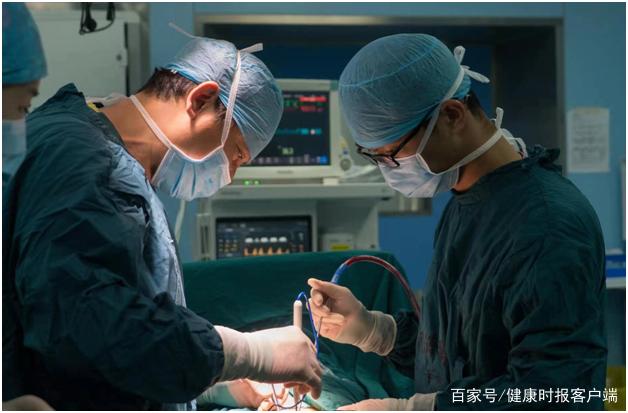
Information picture. Xie Xuejiao
There are 260,000 doctors practicing in many institutions in China, and these departments are common.
Li Xin (pseudonym) is an obstetrician in a third-class hospital in Beijing. According to her, it is common for doctors in obstetrics and gynecology, pediatrics and some departments that do not involve medical insurance to practice more. Doctors usually use weekends to visit other medical institutions, and many private hospitals will take the initiative to find experts from public hospitals to establish cooperation.
Multi-point practice of doctors refers to the behavior that qualified medical practitioners are employed to practice in more than two medical institutions after being registered by the health administrative department. The registration places of clinical practitioners are divided into provincial administrative regions. According to the existing regulations, clinical practitioners can apply for up to three majors in the same category as the scope of practice for registration.
In 2009, according to the Opinions of the State Council, the Central Committee of the Communist Party of China on Deepening the Reform of Medical and Health System, the former Ministry of Health issued the Notice on Issues Related to Doctors’ Multi-point Practice, which was piloted in some areas. In 2014, the former National Health and Family Planning Commission and other five ministries and commissions jointly issued "Several Opinions on Promoting and Standardizing Doctors’ Multi-point Practice". According to this regulation, doctors only need to apply to the administrative department that approved the practice of the institution to increase their registration, instead of applying to the health administrative department for registration through the original medical institution. Simply put, doctors have the initiative to start multi-point practice in their own hands, and they don’t need to ask for opinions from the unit as before.
On October 28th, 2020, Yu Xuejun, deputy director of National Health Commission, introduced that during the 13th Five-Year Plan period, the Measures for the Administration of Physician Practice Registration was revised and promulgated, and a regional registration system for physicians was established. The practice place was changed to "provincial or county-level administrative divisions", and doctors were "registered once, and the region was effective", so they could practice in multiple institutions. In addition to the main practice institutions need to be registered, doctors can practice in other institutions for the record.
According to the data released by National Health Commission, there are currently 260,000 doctors practicing in multiple institutions in China.
Doctors’ practice should break through geographical restrictions, and "flying knife" should be standardized management.
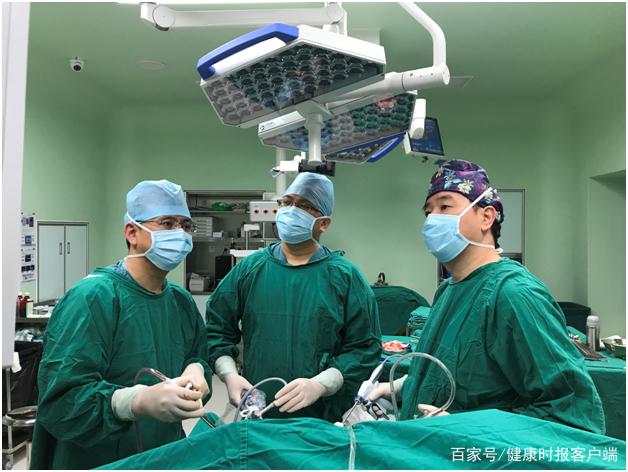
Information picture. Zhang yangshe
In recent years, the term "flying knife" has appeared in the surgical field, which refers to the behavior of doctors using their rest time to go to other medical institutions for surgery privately. To some extent, this method has alleviated the problem of lack and uneven distribution of medical resources in some grass-roots areas, but at the same time, it has become one of the reasons for medical disputes because of lack of norms.
"Although many people have high hopes for doctors to practice more, hoping to realize the flow of doctors and alleviate the uneven distribution of medical resources, there are not many doctors who actually put them into action in reality. First, the procedures are relatively complicated and may not meet the actual needs. Second, situations like’ flying knives’ cannot be included in the scope of multi-point practice, which is precisely the needs of many patients." Song Hui told the Health Times reporter.
In 2019, a video of "The Doctor Accepts the Patient’s 10,000 Yuan Red Packet Privately" once caused quite a stir. The incident originated from the fact that a family member of a cerebral infarction patient first agreed to accept "flying knife surgery", and then secretly recorded the video of the private payment transaction with the surgeon and reported that the doctor accepted the red packet.
"It is the fundamental problem that doctors need to solve to get better diagnosis and treatment for patients in areas with limited medical resources.’ Flying knife’ was originally a win-win thing, but it was often a good thing with good intentions." Song Hui said that according to the current method of selecting one or two fixed-point practitioners, it is not suitable for the demand of "flying knives". "There are only a few experts, but there are patients in need all over the country, and it is impossible to concentrate on medical institutions where several doctors practice at fixed points, and this demand is very common in surgery."
Li Xin also believes that "flying knife" can help patients avoid traveling and fatigue, and it also allows doctors to get a certain amount of labor remuneration in their spare time, which is a "win-win" thing. However, at present, management is indeed not standardized, and rules should be clearly formulated and the cost standard should be given reasonably, instead of letting doctors carry the pot of "receiving red envelopes".
He Lin said that doctors should use their spare time to "fly knives", which should be supported and protected, while getting reasonable remuneration and benefiting more patients. "We can drive all over the country with a driver’s license. After years of study and accumulation, the doctor has obtained a medical practitioner’s license. Why should he be confined to one area and one hospital? What we should think about now is how to manage the phenomenon like’ flying knife’ reasonably. "
Doctors’ resources should belong to the whole society, and multi-point practice should be liberalized to achieve "three wins"
According to the regulations, doctors who are willing to practice more need to file in the medical institutions that practice more, and then apply to the local health administrative department, and can practice more after approval.
"However, this method still has some difficulties in practical operation. Although it is not allowed to pass this unit for multi-point practice now, doctors will still worry about affecting their development in this unit." Song Hui said.
Li Xin told reporters that from the hospital’s benefits and management issues, although the hospital leaders do not oppose practicing more for their doctors, it is not realistic to want them to give a green light. "Some hospitals stipulate that the director of the department should not practice more on weekdays, and the director of the department does not necessarily agree that his doctors will go out and will use attendance to get a card. In addition, taking our obstetrics department as an example, the number of pregnant women has dropped significantly in the past two years, and the hospital ordered that doctors should not take patients to private hospitals. These are actually some invisible obstacles. "
He Lin pointed out that practicing in the registered practice place, that is, the medical institution, has been implemented for more than 20 years, which seriously does not adapt to the development of the current healthy China strategy and cannot satisfy people’s yearning for a healthy life. "As a high-quality and scarce resource of a country, doctors should not become the’ private property’ of a hospital, but should belong to society and the country, and should play a greater role in safeguarding people’s lives and health."
"Let go of multi-point practice, for primary hospitals, more experts can be invited to come to the clinic to improve the medical technology level of our hospital in on-site teaching; For ordinary people, they can hang up the expert number without going to the big hospital, which can solve the problems of difficult and expensive medical treatment; For doctors, reasonable mobility can encourage medical staff to study their business, improve their medical technology and get reasonable remuneration by virtue of their medical skills. Therefore, the effect of’ win-win-win’ can be achieved by amending the law on medical practitioners and liberalizing multi-point practice. " He Lin said.
Reporting/feedback