Powell will be the chairman of the Federal Reserve, and the future policy direction will attract attention.
BEIJING, Feb. 5 (Zhang Aijing)-According to a comprehensive report, after former Federal Reserve Chairman janet yellen leaves office, his successor Jerome Powell will be sworn in on the 5th local time. Since Powell was nominated at the end of last year, what kind of policy the Fed will adopt after replacing the "head" has been attracting much attention from the outside world. Public opinion generally believes that Powell’s policy stance is basically consistent with Yellen’s and will continue the Fed’s current gradual rate hike route.
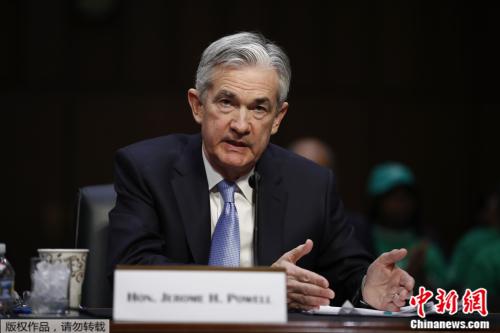
Data Map: On January 2, 2018, local time, Trump nominated Jerome Powell, director of the Federal Reserve Board of the United States, to succeed Yellen as the next chairman of the Federal Reserve.
Not the chairman of the Federal Reserve from economics.
The Federal Reserve System of the United States is responsible for performing the duties of the central bank of the United States, and its core management institution is the Federal Reserve Board. At the beginning of November last year, US President Trump nominated Powell to replace Yellen, the current chairman of the Federal Reserve Board, as the next chairman. On the 23rd of last month, Powell’s personnel case was passed in the Senate, and the nomination was finalized.
Powell, who is nearly 65 years old, was born in a prestigious school and holds a bachelor’s degree in political science and a doctor’s degree in law. He is the first chairman of the Federal Reserve without a doctor’s degree in economics in the past 40 years. He used to be a lawyer and held important positions in investment banks, private equity funds and think tanks.
In 1990, Powell joined the Ministry of Finance of the Bush administration, and in 1992, he was promoted to the position of Deputy Minister of Finance. In 1993, he left the government to become the executive director of Banker Trust, then worked in a large private equity fund, and then started his own investment company. In 2012, Powell was nominated by then-President Barack Obama and took office as a director of the Federal Reserve.
According to the analysis, although Powell is not from economics, his long-term working background in financial markets and rich experience in different fields make him the chairman of the Federal Reserve who can balance the interests and opinions of all parties in Trump’s eyes. These work experiences may bring different perspectives to the Fed’s decision-making.
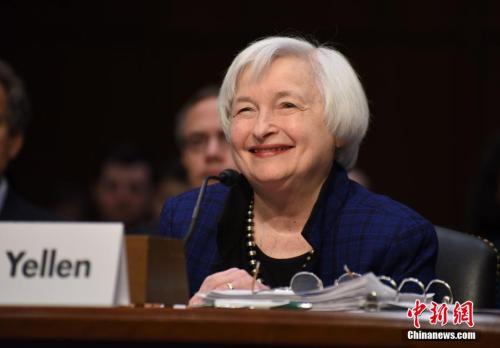
Data Map: On November 17, 2016, local time, then Federal Reserve Chairman Yellen attended the hearing held by the Joint Economic Committee of the American Congress in Washington, looking forward to the US economic situation. China News Service reporter Zhang Weiran photo
It is expected to continue the Yellen policy.
Regarding the policy direction of the Fed after the change of chairman, it is generally believed by market participants that Powell will continue the relatively "dove" Yellen line, continue to push for the end of the ultra-loose monetary policy implemented by the United States after the financial crisis, and at the same time begin to gradually relax financial supervision.
On the so-called "dove" and "hawk" monetary policy ideas, Powell is considered to belong to the former, that is, he will not tighten the money supply and raise interest rates too quickly. During Yellen’s tenure, he supported cautiously raising interest rates and slowly withdrawing from quantitative easing.
In November last year, Powell made it clear at the case hearing of the US Senate that if he was approved as the chairman of the Federal Reserve, he would lead the Federal Reserve to maintain the current gradual rate hike and continue to push forward the reduction of its balance sheet. Banking supervision will be relaxed appropriately, but the core reform measures introduced after the financial crisis will be adhered to.
At present, the process of "shrinking the table" set by Yellen has started. Next, there is still uncertainty whether Powell will reduce the scale at the original speed. According to the analysis, if Powell prefers to maintain the stability and prosperity of the financial market, he may slow down the process of "shrinking the table".

Data Map: On January 17, 2018, local time, the Dow Jones index broke through 26,000 points. During Yellen’s tenure, the unemployment rate in the United States also fell to its lowest point in 16 years.
Dilemma: Do you want to speed up the rate hike?
On the eve of Powell’s inauguration, the Federal Reserve held a regular monetary policy meeting on January 30 and 31, announcing that the federal funds rate would remain unchanged in the range of 1.25% to 1.5%. At the same time, the Fed said that it is expected to continue to raise interest rates gradually.
The Federal Reserve said that the basic judgment on the US economic situation is generally optimistic; Considering the labor market and inflation rate, it is decided to keep the federal funds rate unchanged and the monetary policy loose to support the labor market and push the inflation rate to rise to 2% continuously.
In 2017, the Federal Reserve raised interest rates three times, each time by 25 basis points. The market had previously predicted that the pace of the Fed’s interest rate hike in 2018 would be consistent with that in 2017.
At present, the American economy is in a state of full employment and low inflation, and it is in the best stage after the recovery from the financial crisis. According to the analysis, Powell’s main task after taking office is to ensure sustained economic growth and prevent it from overheating. Once the economy is overheated, the Fed will have to speed up the pace of raising interest rates, which may bring the risk of economic downturn; However, if it is "accelerated", it may lead to a long-term failure to reach the 2% inflation target.
The Federal Reserve Committee after Powell’s "Promotion"
After Powell takes office as chairman of the Federal Reserve, there will be many vacancies in the seats of the Federal Reserve Committee. The Federal Reserve Committee consists of seven members, including one chairman, one vice-chairman and five directors. They need to be nominated by the President and approved by the Senate. The term of office of the directors of the Federal Reserve is 14 years, and the term of office of the chairman and vice-chairman is 4 years, which can be re-elected.
According to the articles of association, the chairman of the Federal Reserve can continue to serve as a director after the end of his term. Former President Yellen’s term of office as a director will not expire until January 2024, but she chose not to serve as a director at the same time when she stepped down as chairman.
Powell’s promotion, Yellen’s "double retreat", plus three vacancies, including the vice chairman, have now expanded to four seats on the Federal Reserve Board. Next, who can enter the Federal Reserve Committee, a large part of the decision is in the hands of US President Trump, and the policy propositions of new members of these committees will also affect the future policy direction of the Fed.